
Tarot Spreads — Layouts for Every Question
A spread is how you lay cards out during a reading. Each position in the spread asks a different question. The card that falls there gives the answer. Celesties covers spreads from a single daily card to the full 10-card Celtic Cross.
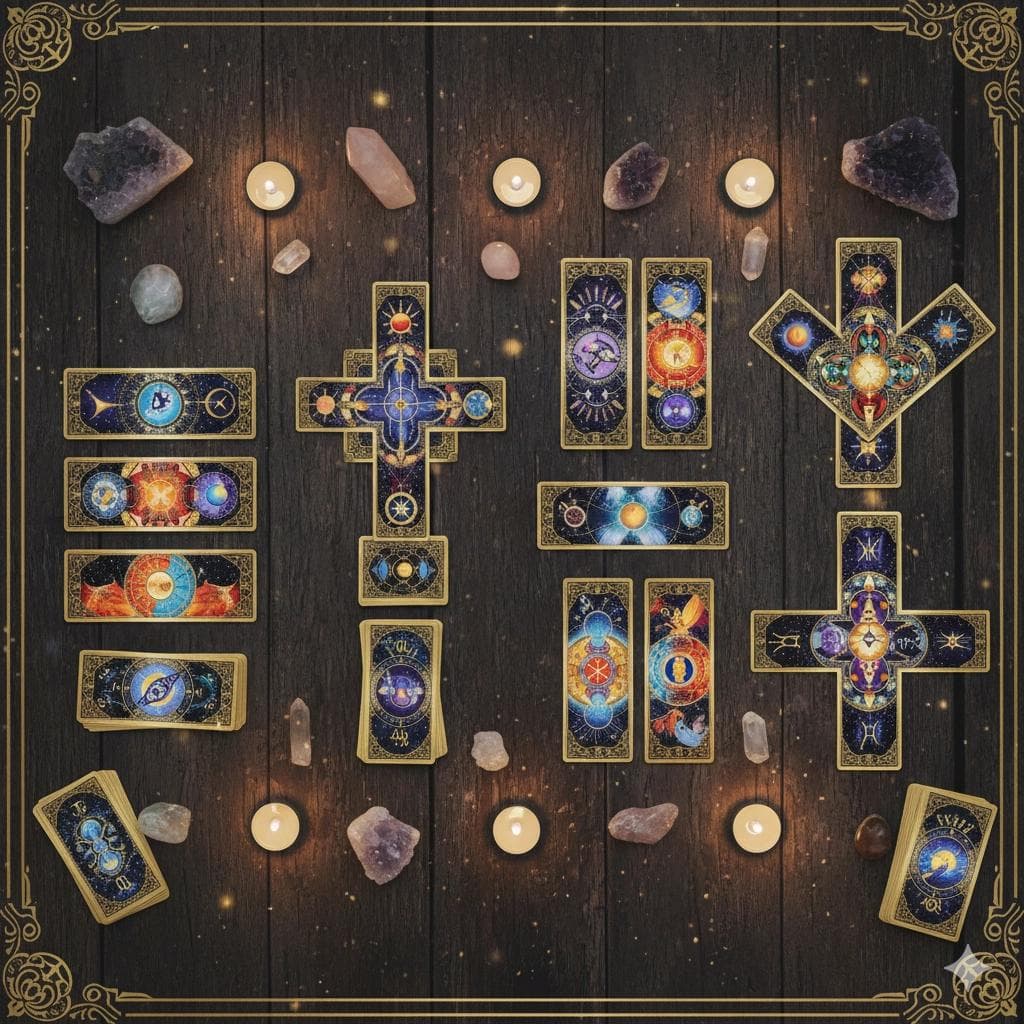
What is a Tarot Spread?
A tarot spread is a specific pattern for laying out cards. Each position in the pattern represents something — past, present, future, your feelings, external influences, the likely outcome, and so on.
The spread gives structure to your reading. Without it, you're just pulling random cards. With it, each card has a role and a context that shapes its meaning.
Simple tarot spreads use 1–3 cards and work well for quick questions. Complex spreads use 7–10+ cards and dig into layered situations where multiple factors are at play.
Why Spreads Matter
Tarot layouts create a framework that transforms individual tarot card meanings into a coherent narrative. The same card (say, The Tower) means different things in different positions. In the "past" position, it shows upheaval you've already experienced. In the "advice" position, it suggests you need to break down something that isn't working. Position context changes everything.
Well-designed tarot spreads also prevent reading bias. When you assign each position a clear question before drawing cards, you can't cherry-pick interpretations to fit what you want to hear. The structure keeps you honest.
Popular Tarot Spreads
Celtic Cross Spread
The classic 10-card layout. Covers your situation, challenges, past, future, hopes, and outcome. Best for complex questions that need a full picture.
Three Card Spread
Three cards, three answers. Past/present/future, situation/action/outcome, or any three-part question. The best spread for daily practice.
Love & Relationship Spread
7 cards focused on romantic dynamics. Your energy, their energy, what connects you, and where things are heading.
Career & Success Spread
5 cards for professional questions. Current position, challenges, hidden opportunities, advice, and likely outcome.
Horseshoe Spread
7 cards in a horseshoe shape. A balanced overview covering past, present, future, advice, people involved, obstacles, and outcome.
Daily Card Draw
One card, one message. Pull a card each morning as meditation, guidance, or a focus point for the day. Takes 5 minutes.
Find a Spread by Topic
Love & Relationships
Love spread, soul mate spread, twin flame spread. Relationship dynamics and romantic potential.
Career & Money
Career spread, financial guidance, business decisions. Professional direction and money questions.
Spiritual Growth
Spiritual path, life purpose, chakra alignment. Inner work and personal development.
Decision Making
Yes/no spread, crossroads spread, choice comparison. When you need a clear answer.
How to Choose the Right Spread
Match the spread to your question. Here's a simple framework:
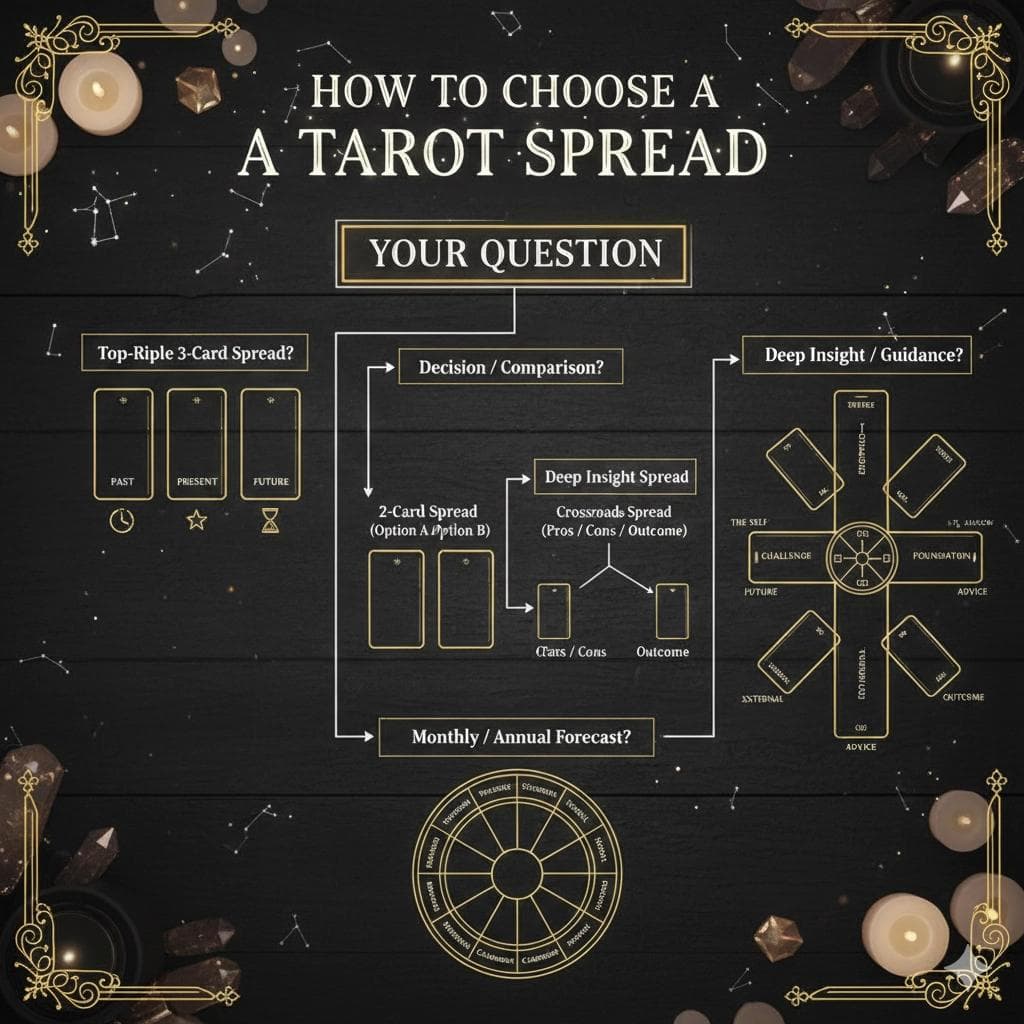
- Yes/no question? → Daily Card or Three Card Spread
- Relationship question? → Love Spread (7 cards)
- Career decision? → Career Spread (5 cards)
- Complex situation with many factors? → Celtic Cross (10 cards)
- Just want daily guidance? → Daily Card Draw (1 card)
- General life overview? → Horseshoe Spread (7 cards)
If you're not sure, start with the Three Card Spread. It works for almost any question, and you can always do a larger spread afterward if you need more detail.
Tips for Better Spread Readings
Prepare
Find a quiet spot. Clear the table. Take a few breaths. The cards respond better when you're focused and grounded.
Read Positions
Before interpreting the card itself, understand what the position asks. A card in the "future" slot means something different than the same card in "obstacles."
Tell a Story
Don't read each card in isolation. Look at the spread as one story. How does the past card lead to the present? How does the advice card relate to the outcome?
How to Perform a Tarot Spread
Focus on Your Question
Formulate a clear, specific question. "What should I know about my career this month?" works better than "Tell me about my future." The more specific the question, the more useful the answer.
Shuffle and Draw
Shuffle the deck while thinking about your question. When it feels right, stop and draw the number of cards your chosen spread requires. Lay them face-down in the spread pattern first, then flip them one at a time.
Read Position by Position
Start with the first position. Read the card meaning in context of what that position asks. Then move to the next. After reading each card individually, step back and look at the full spread as one connected story.
Record Your Reading
Write down the cards and your interpretations right after the reading. Note the date and your question. Come back in a week or month to see how the tarot spread played out. This builds pattern recognition and helps you learn which tarot spreads work best for different questions.
Frequently Asked Questions
What is the best tarot spread for beginners?
The Three Card Spread. Three cards, clear positions (past/present/future or situation/action/outcome), and it works for almost any question. Once you're comfortable, move to the Horseshoe or Celtic Cross.
How many cards should I use in a tarot spread?
It depends on the question. One card for daily guidance. Three for quick answers. Five to seven for focused topics like love or career. Ten for the Celtic Cross when you need a full picture.
What is the Celtic Cross spread?
The most widely used tarot layout. It uses 10 cards arranged in a cross pattern with a staff. Positions cover your current situation, challenges, past, future, conscious thoughts, subconscious, advice, external influences, hopes/fears, and the likely outcome.
Can I create my own tarot spread?
Yes. Define each position with a clear question, arrange them in a pattern that makes sense, and test it a few times. Many experienced readers design custom spreads for specific situations.
What if a card doesn't make sense in its position?
Sit with it. The connection isn't always obvious immediately. Consider the card's reversed meaning, look at surrounding cards for context, or journal about it and revisit later. Sometimes the meaning becomes clear after the reading plays out.
Do I have to use a spread, or can I just pull cards?
You can pull cards freely, but spreads add structure and depth. Each position gives the card a specific role, which makes interpretation more focused. For beginners especially, spreads help avoid vague or scattered readings.