Tarot Readings — Guidance for Every Life Area
A tarot reading takes the cards and applies them to your actual questions. Love, career, money, personal growth — Celesties offers structured readings for each area. Pick a reading type, follow the steps, and get clear answers.
What is a Tarot Reading?
A tarot reading is a structured session where you draw cards to answer a specific question. You choose a spread (the layout), focus on your question, draw cards, and interpret what they say in context.
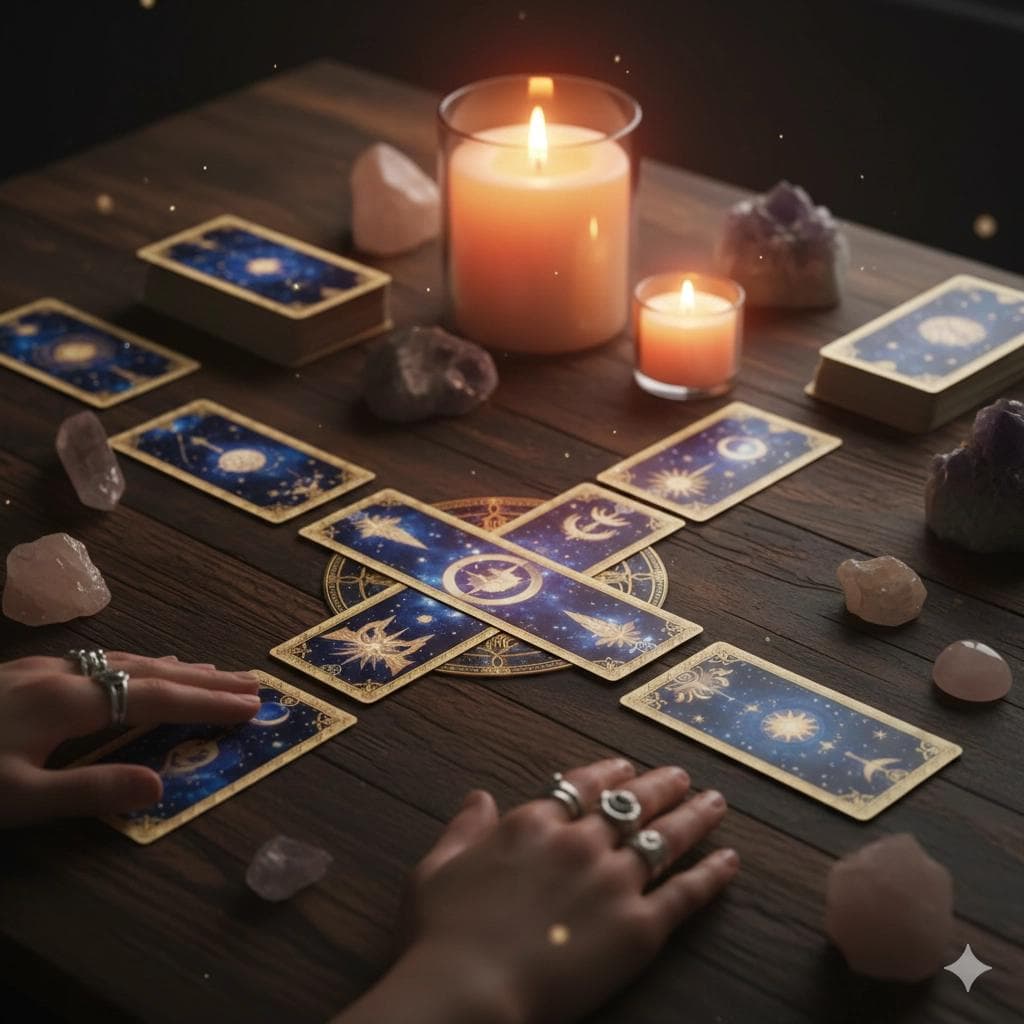
Readings aren't fortune-telling. They're a tool for reflection and perspective. The cards show patterns, possibilities, and blind spots — then you decide what to do with that information.
You can read for yourself or for someone else. Self-readings are how most people practice. The key is asking clear questions and staying honest about what you see.
Choose Your Reading
Daily Card Reading
One card, one message. Pull a card each morning for focus, guidance, or reflection. The fastest way to build your practice.
Love & Relationship Reading
Explore romantic connections, relationship dynamics, and what the cards say about your love life. Covers both your energy and theirs.
Yes/No Reading
Need a direct answer? The yes/no technique gives you a clear response based on card orientation and suit energy.
Career & Success Reading
Professional direction, opportunities, and the best path forward. For job decisions, projects, and career changes.
Spiritual Path Reading
Inner work and personal growth. What your soul needs right now, what's blocking you, and where you're headed.
Weekly Forecast
A 7-card reading — one card per day. Plan your week with tarot insight and know what energy to expect.
All Reading Types
| Reading | Focus Area | Cards Used | Best For |
|---|---|---|---|
| Daily Card | Daily guidance | 1 | Morning focus, quick insight |
| Three Card | Quick answers | 3 | Past/present/future questions |
| Love Guidance | Romantic connections | 7 | Relationships, attraction |
| Soul Mate | Soul connections | 5 | Finding or recognizing a soul mate |
| Relationship Healing | Conflict resolution | 6 | Healing after disagreements |
| Career Path | Professional direction | 5 | Job decisions, career changes |
| Financial Guidance | Money matters | 4 | Financial decisions, budgeting |
| Business Decision | Entrepreneurship | 5 | Business choices, partnerships |
| Spiritual Path | Inner growth | 6 | Spiritual development, blocks |
| Life Purpose | Life direction | 7 | Finding your calling |
| Shadow Work | Self-exploration | 5 | Facing hidden aspects |
| Yes/No | Direct answers | 1-3 | Specific yes/no questions |
How to Prepare for a Reading
Good preparation leads to better readings. Here's what to do before you draw:
- Write down your question. Be specific. "What should I know about my career this month?" beats "Tell me about my future."
- Find a quiet space. Distractions pull your focus. You don't need candles or crystals — just a place where you can think clearly.
- Shuffle with intention. Hold your question in mind while shuffling. There's no right number of shuffles — stop when it feels ready.
- Draw the cards face-down first. Lay out the full spread before flipping. This keeps you from reacting card by card.
- Read the full spread, not just individual cards. Each card's meaning shifts based on the cards around it and its position.
Reading Responsibly
Tarot is a tool for self-reflection, not a substitute for professional advice.
What tarot can do:
- Give you perspective on a situation
- Highlight patterns you might not see
- Help you clarify your own feelings
- Offer a structured way to reflect on decisions
What tarot cannot do:
- Predict the future with certainty
- Replace medical, legal, or financial advice
- Make decisions for you
- Tell you what other people are thinking
When Tarot Isn't Enough
If a tarot reading brings up serious emotional distress, anxiety, depression, or mental health concerns, reach out to a qualified mental health professional. Tarot readings work as a reflective practice and personal exploration tool — they don't replace therapy, counseling, or medical treatment.
Some situations require professional support, not cards:
- Persistent feelings of hopelessness or depression
- Suicidal thoughts or self-harm urges
- Trauma processing and PTSD symptoms
- Severe anxiety that affects daily functioning
- Relationship abuse or unsafe situations
Celesties provides free tarot reading guidance for self-reflection and spiritual exploration. For mental health support, contact a licensed therapist, counselor, or crisis helpline in your area.
Keep Exploring
All 78 Card Meanings
Look up any card that came up in your reading. Full upright and reversed meanings.
Tarot Spreads
Find the right layout for your question — from 1-card daily draws to the 10-card Celtic Cross.
Learn Tarot
Build your reading skills. Beginner guides, symbolism, intuition, and advanced techniques.
How to Get the Most from Your Reading
Ask a Clear Question
Vague questions give vague answers. Instead of "What about love?", try "What do I need to know about my relationship with [person] right now?" The clearer your question, the more useful the tarot reading.
Match the Reading to Your Question
Use a daily card for general guidance. A love tarot reading for relationship questions. A career reading for work decisions. Each reading type is designed for its topic — use the right tool for the job.
Sit with the Results
Don't rush to a conclusion. Write down what you drew, what you noticed, and how it connects to your question. Sometimes the meaning clicks immediately. Sometimes it takes a day or two.
Track Patterns Over Time
Keep a reading journal. Note the date, question, cards drawn, and your interpretation. After a month, review past readings to see which patterns appeared multiple times. Recurring cards or themes show what your subconscious is working through. This practice also helps you learn which types of tarot readings work best for different questions.
Frequently Asked Questions
How do tarot readings work?
You focus on a question, draw cards, and interpret them based on their position in the spread and their traditional meaning. The cards work as a reflective tool — they show patterns and perspectives you might not see on your own.
Can I read tarot for myself?
Yes. Self-readings are the most common way people practice. Use a spread for structure, and write down your interpretations. The main challenge is staying objective — a journal helps with that.
How often should I get a tarot reading?
Daily card draws are fine every day. Full readings (5+ cards) work best with some space between them — weekly or when a new question comes up. Reading too frequently on the same question tends to muddy the answers.
Are free tarot readings as good as paid ones?
The cards don't know whether money changed hands. What matters is the quality of interpretation. Celesties gives you the meanings, spreads, and techniques — the reading quality comes from your focus and honesty.
What is the best tarot reading for love questions?
The Love & Relationship reading (7 cards) covers both your energy and the other person's, plus the dynamics between you. For simpler questions, a Three Card Spread with positions like "You / Them / The Relationship" also works well.
Should I ask specific or general questions?
Specific questions give more useful results. "What do I need to know about changing jobs this month?" works better than "Tell me about my career." Start specific and broaden only if the initial reading raises new questions.