Learn Tarot Reading
Celesties organizes tarot learning into three stages: beginner basics, developing skills, and advanced practice. Start where you are, move at your pace, and use the card library as your reference along the way.
Why Learn Tarot with Celesties?
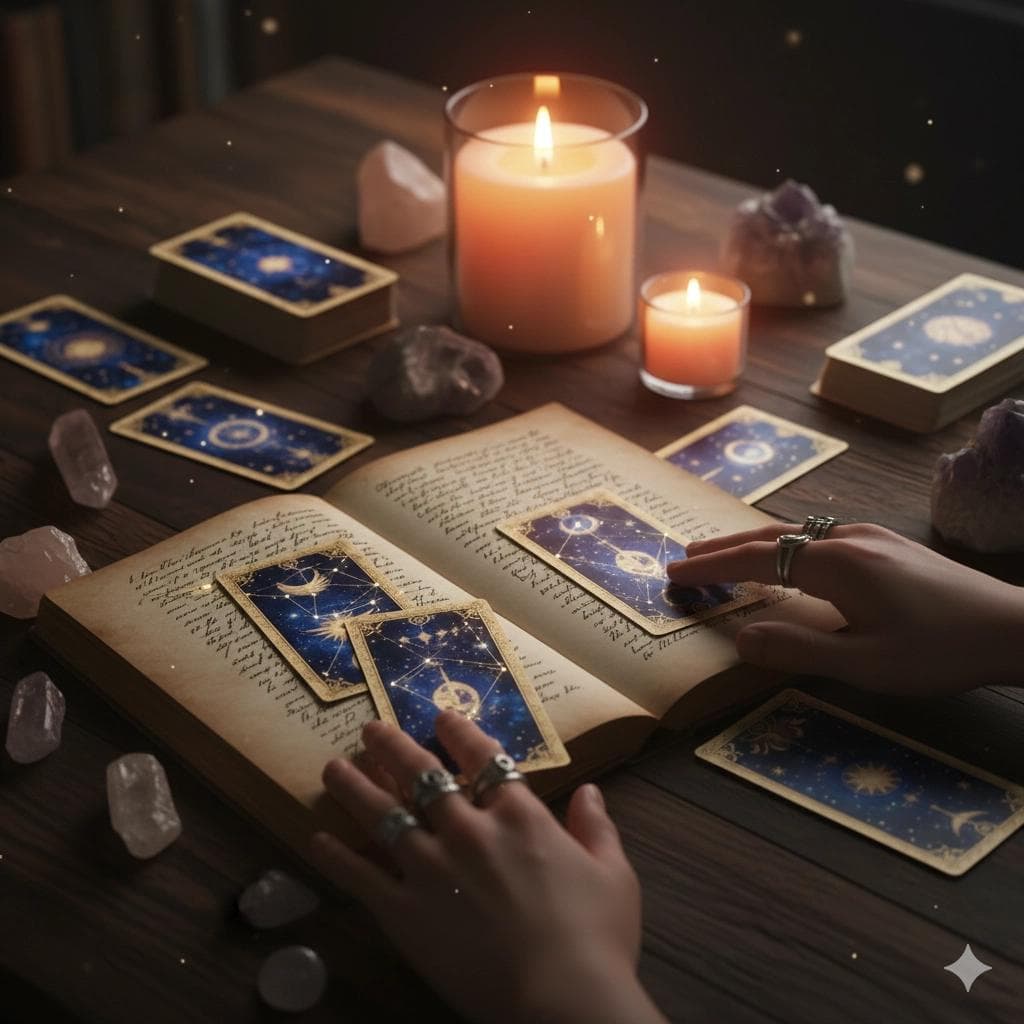
Celesties gives you a structured path instead of scattered blog posts. Every lesson builds on the last. Card meanings are always one click away. And everything is free.
You don't need special gifts or years of study. Tarot is a skill built through practice — learning the symbols, studying the cards, and reading regularly. The more you practice, the faster it clicks.
Our approach: learn tarot fundamentals first, build confidence with simple spreads, then gradually add complexity. No shortcuts, no mystification — just clear information and steady progress.
Common Beginner Mistakes to Avoid
Most people starting tarot for beginners make the same three errors. First, they try to memorize all 78 cards at once instead of learning Major Arcana first. Second, they rely only on guidebooks instead of looking at the card imagery and trusting their first impressions. Third, they avoid reading for themselves, thinking they need to practice on others — when self-reading is actually how most readers develop skill.
Celesties structures your learning to avoid these mistakes. You'll start with 22 cards, not 78. You'll learn how to read tarot using both book meanings and visual intuition. And you'll practice on your own questions first, building confidence before reading for anyone else.
Beginner's Path
Getting Started with Tarot
Your first steps. Choosing a deck, understanding the 78-card structure, and the difference between Major and Minor Arcana.
Card Meanings Fundamentals
How to read the Major Arcana, Minor Arcana suits, and court cards. Upright vs reversed — what changes and what doesn't.
Your First Reading
A step-by-step walkthrough of your first 3-card reading. What to do, how to interpret, and common mistakes to avoid.
Developing Your Skills
Intuitive Reading
Move beyond memorized meanings. Trust your first impressions, read body language in the imagery, and let patterns emerge.
Symbolism & Imagery
Colors, numbers, animals, plants — every element on a tarot card carries meaning. Learn to decode what the artist put there.
Reading Techniques
Clarification cards, timing techniques, how to handle reversals, and reading multiple cards as one connected story.
Advanced Topics
Professional Reading
Reading for others, setting boundaries, pricing your work, and the ethics of professional tarot practice.
Tarot Journaling
Track daily draws, log full readings, spot patterns over time, and develop personal card meanings unique to you.
Creating Your Own Spreads
Design custom spreads for specific situations. How to define positions, structure the layout, and test your creations.
Your Learning Journey
| Level | Focus | Milestones |
|---|---|---|
| Beginner (0–3 months) | Major Arcana, first spreads, daily draws | Know all 22 Major Arcana, comfortable with 3-card spread, keeping a tarot journal |
| Developing (3–12 months) | Minor Arcana, symbolism, reading for others | Know all 78 cards, use 3–5 spreads, read for friends regularly |
| Advanced (1+ years) | Personal style, custom spreads, astrology integration | Develop your own reading approach, create original spreads, consider professional practice |
Don't rush between levels. Spend real time at each stage. The goal isn't speed — it's confidence and depth.
Study Resources
Recommended Books
- "Learning the Tarot" by Joan Bunning — best structured beginner guide
- "Seventy-Eight Degrees of Wisdom" by Rachel Pollack — deep card-by-card analysis
- "The Ultimate Guide to Tarot" by Liz Dean — comprehensive visual reference
Deck Studies
Understanding a specific deck's artwork deepens your readings. The three most studied decks:
- Rider-Waite-Smith — the standard learning deck, most widely referenced
- Thoth Tarot — by Aleister Crowley, rich in esoteric symbolism
- Marseille Tarot — historical European deck, minimal imagery
Connections to Other Practices
Tarot connects with astrology (zodiac signs map to cards), numerology (numbers carry meaning across suits), and Kabbalah (the Tree of Life maps to Major Arcana).
How to Learn Tarot in 4 Steps
Get a Deck and Study the Major Arcana
Start with a Rider-Waite-Smith deck or any deck with detailed imagery. Learn tarot by focusing on the 22 Major Arcana first — they carry the strongest themes and appear frequently in readings.
Practice with Daily Draws
Pull one card each morning. Read its meaning, sit with it for a minute, then go about your day. At night, reflect on how it showed up. This single habit builds understanding faster than reading 10 books.
Learn the Minor Arcana One Suit at a Time
Pick the suit that feels most relevant to your life right now. Wands for career and motivation. Cups for relationships. Swords for decisions. Pentacles for money. Learn tarot cards one suit at a time — master one before starting the next.
Start Reading Spreads for Real Questions
Once you know the cards, put them to work. Start with the Three Card Spread for daily questions. Move to larger spreads when you need more detail. This is how to read tarot in practice — apply what you've learned to actual life situations.
Frequently Asked Questions
How long does it take to learn tarot?
Most people feel comfortable with basic readings after 2–3 months of daily practice. Full proficiency with all 78 cards and multiple spreads takes closer to a year. It's an ongoing practice — even experienced readers keep learning.
Do I need psychic abilities to read tarot?
No. Tarot is a system of symbols and meanings that anyone can learn. Intuition helps, but it develops through practice — you don't need it to start. Think of it as a skill, not a gift.
Which tarot deck is best for beginners?
The Rider-Waite-Smith deck. It has detailed imagery on every card, which makes learning easier. Most books and online resources reference this deck. Once you're comfortable, explore decks with artwork that speaks to you.
Should I memorize all 78 card meanings?
Not upfront. Learn the Major Arcana first, then one Minor Arcana suit at a time. Use Celesties card pages as a reference during readings — look things up as you go. Understanding replaces memorization over time.
Can I learn tarot online for free?
Yes. Celesties provides free card meanings, spread guides, and learning resources. Between our card library and daily practice, you have everything you need to learn without spending money.
What is the Fool's Journey?
It's the story told by the 22 Major Arcana cards, starting with The Fool (card 0) and ending with The World (card 21). It represents a soul's path through innocence, challenge, growth, and completion. Learning this narrative helps you understand how the Major Arcana cards relate to each other.