Tarot Guide — History, Meanings & Reading
Tarot is a 78-card system used for self-reflection, guidance, and personal growth. This comprehensive tarot guide covers everything you need to learn tarot: card meanings, deck types, reading techniques, and how tarot works.
What is Tarot?
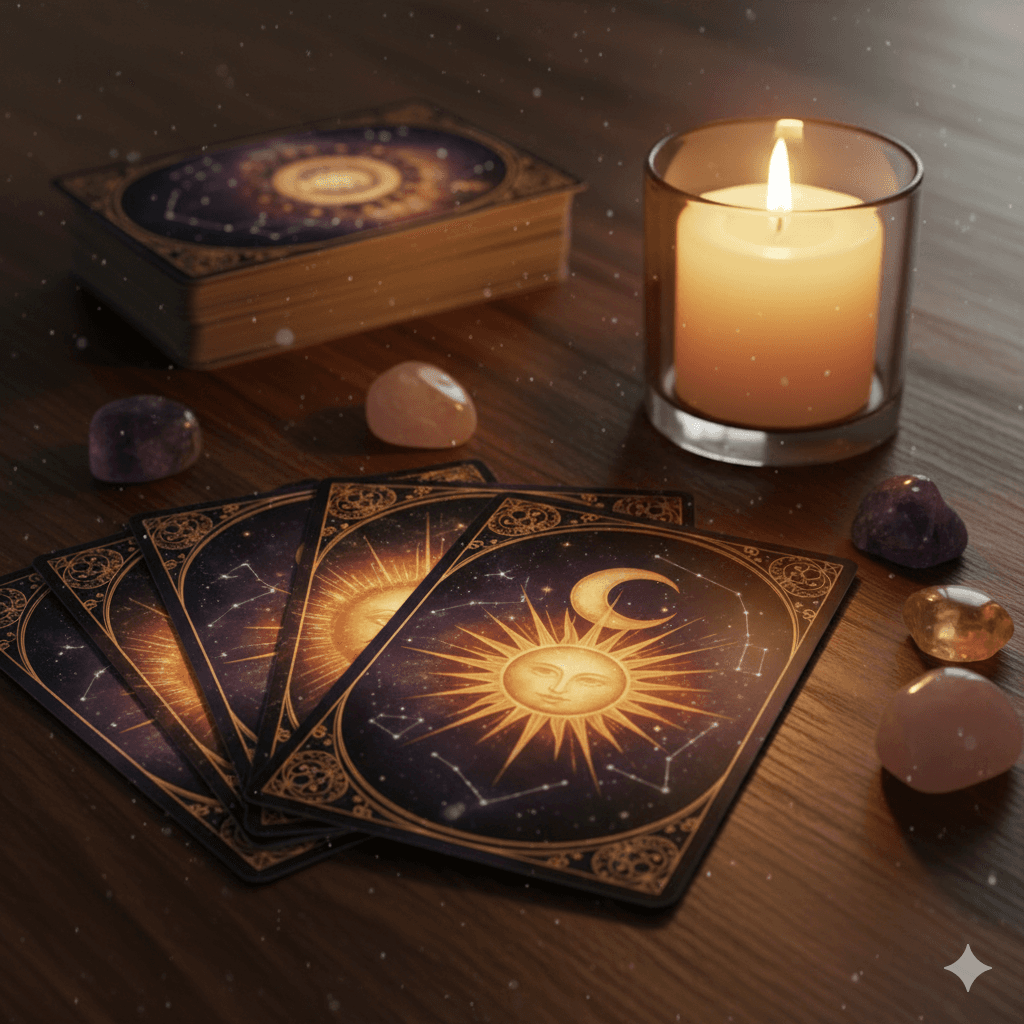
Tarot is a deck of 78 illustrated cards used for self-reflection, decision-making, and spiritual practice. Each tarot card carries symbolic meaning drawn from centuries of Western mysticism, psychology, and universal archetypes. The deck consists of 22 Major Arcana cards representing life's big themes and 56 Minor Arcana cards covering everyday situations across four suits: Wands (fire/action), Cups (water/emotions), Swords (air/thought), and Pentacles (earth/material).
People use tarot readings for guidance, not fortune-telling. The cards reflect current energy and potential paths based on your choices. You don't need psychic abilities — tarot works through symbolism, intuition, and honest self-inquiry. Celesties provides detailed tarot card meanings for all 78 cards, helping you build your practice from beginner to confident reader.
The History of Tarot
Tarot cards originated in 15th-century Italy as a card game called tarocchi. Wealthy families commissioned hand-painted decks featuring allegorical imagery. For over 300 years, tarot remained purely recreational — nothing to do with divination or mysticism.
The shift came in the late 18th century when French occultists, particularly Antoine Court de Gébelin and Jean-Baptiste Alliette (Etteilla), began interpreting tarot as an ancient Egyptian mystery system. This wasn't historically accurate, but it sparked the Western esoteric tradition of tarot reading that continues today.
The modern tarot era began in 1909 when Arthur Edward Waite and artist Pamela Colman Smith created the Rider-Waite-Smith deck (often called RWS). This deck revolutionized tarot by adding detailed illustrated scenes to all 56 Minor Arcana cards, not just the Major Arcana. Before RWS, most decks used simple pip cards (like regular playing cards) for the Minors. Smith's imagery made tarot card meanings accessible to anyone, not just occult scholars.
The 20th century brought psychological approaches to tarot. Carl Jung's work on archetypes validated tarot's symbolic language. By the 1970s, tarot entered mainstream culture as a tool for self-reflection and personal growth. Today, millions worldwide use tarot daily — not as superstition, but as a structured framework for examining life's questions.
Celesties follows the RWS tradition, providing tarot card meanings grounded in both historical symbolism and modern psychological insight. Whether you're looking to learn tarot for spiritual practice, creative inspiration, or decision-making, understanding this history helps you read with depth and context.
Popular Tarot Decks
Choosing your first tarot deck shapes how you learn tarot. Here are five popular tarot decks, each with distinct style and philosophy:
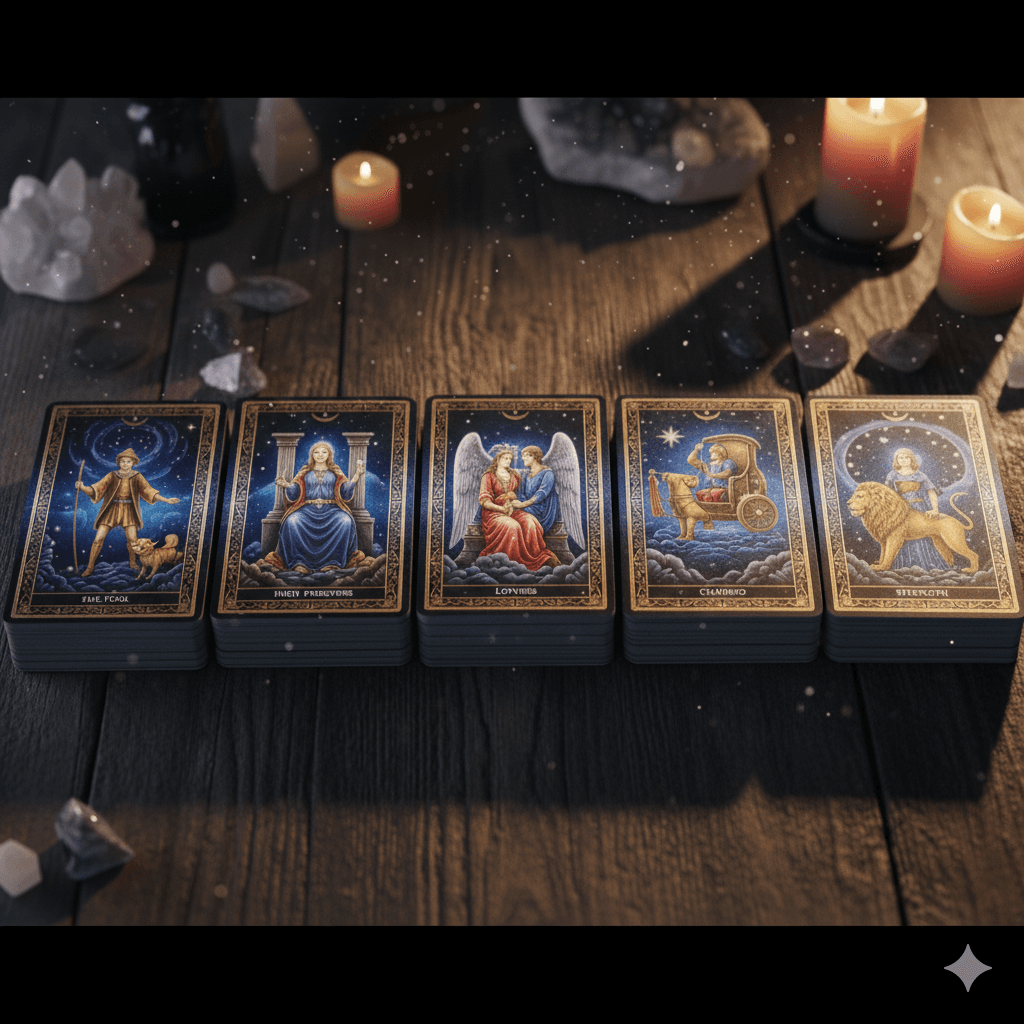
Rider-Waite-Smith (1909) — The most widely used tarot deck worldwide. Created by Arthur Edward Waite and illustrated by Pamela Colman Smith. Every card features detailed imagery, making tarot card meanings intuitive for beginners. Most tarot guides and resources (including Celesties) reference RWS symbolism.
Thoth Tarot (1969) — Designed by Aleister Crowley and painted by Lady Frieda Harris. Dense occult symbolism, Kabbalistic references, and vivid color. Best for advanced students interested in ceremonial magic and esoteric philosophy.
Tarot de Marseille (Traditional) — Classic French tarot style dating to the 16th century. Major Arcana cards are richly illustrated, but Minor Arcana uses simple pip designs (no scenes). Appeals to purists and those who prefer intuitive, non-narrative reading.
The Wild Unknown (2012) — Created by Kim Krans. Minimalist black-and-white animal imagery. Perfect for readers who connect with nature symbolism and prefer modern, stripped-down aesthetics over traditional occult imagery.
Modern Witch Tarot (2019) — Illustrated by Lisa Sterle. Updates RWS imagery with diverse, contemporary characters. Maintains traditional tarot meanings while making the practice feel accessible and inclusive for new generations.
How Tarot Works
Tarot reading combines three elements: symbolism, psychology, and intuition.
Symbolism forms the foundation. Each tarot card carries universal imagery — archetypes recognized across cultures. The Fool represents beginnings and potential. The Tower represents upheaval and liberation. These symbols speak to the unconscious mind. Carl Jung called them archetypes: patterns of human experience embedded in the collective unconscious. When you draw The Hermit during a period of isolation, the card doesn't predict your future — it reflects your current psychological state and invites reflection.
Psychology provides the framework. Modern tarot readers approach the cards as mirrors, not crystal balls. A tarot spread creates a structured space for examining a question from multiple angles. The Celtic Cross spread, for example, shows present situation, challenges, subconscious influences, recent past, potential future, and more. This framework helps you think through complex situations systematically. Many therapists and coaches integrate tarot into their practice as a projective tool — similar to dream analysis or Rorschach tests.
Intuition connects meaning to life. Memorizing tarot card meanings is useful, but real skill comes from reading cards in context. The Three of Swords (heartbreak, painful truth) means something different in a career reading than a relationship reading. The cards around it shift interpretation further. A skilled reader combines book knowledge with intuitive response to the specific situation.
Celesties teaches all three elements. Our tarot card meanings pages provide symbolic foundations. Our spreads and readings show psychological frameworks. And our beginner's guide helps you develop intuitive confidence. If you're interested in how cosmic timing affects tarot readings, explore our astrology section to see how planetary transits influence card interpretations. Many readers also use numerology to understand card numbers and cycles within the deck.
Tarot vs Other Divination Systems
| System | Structure | Focus | Best For |
|---|---|---|---|
| Tarot | 78 cards, Major/Minor Arcana | Detailed narratives, complex situations | Deep insight, storytelling, psychological reflection |
| Oracle Cards | Varies (20-60 cards), no fixed structure | Affirmations, simple guidance | Daily inspiration, quick messages, beginners |
| Astrology | Birth chart, planetary transits | Cosmic timing, personality patterns | Life planning, understanding cycles, self-knowledge |
| Runes | 24 Elder Futhark symbols | Direct answers, Norse tradition | Yes/no questions, quick guidance, ancient wisdom |
| I-Ching | 64 hexagrams | Change, strategy, Taoist philosophy | Decision-making, Eastern perspective, wisdom seeking |
Tarot's strength is its narrative depth. Unlike oracle cards (which offer single-message guidance) or runes (which give direct yes/no answers), tarot spreads tell stories. A 10-card Celtic Cross reading explores your situation from past influences, subconscious blocks, external factors, hopes, fears, and likely outcomes — all in one session.
Unlike astrology, which maps cosmic timing based on your birth chart and current planetary transits, tarot responds to the question you're asking right now. Astrology shows you the weather; tarot shows you how to navigate it. Many practitioners combine both — checking their daily horoscope before doing a tarot reading to understand the broader cosmic context.
Start Your Tarot Journey with Celesties
Complete Card Directory
Every card in the deck — Major and Minor Arcana. Upright and reversed meanings, keywords, and detailed interpretations for love, career, and personal growth.
Spreads for Every Question
From a simple 3-card draw to the 10-card Celtic Cross. Step-by-step guides for reading positions, choosing the right spread, and interpreting cards together.
Structured Readings
Love, career, daily guidance, yes/no questions. Pre-designed readings that help you apply tarot to real-life situations with clear, actionable insight.
How to Choose Your First Tarot Deck
Start with Rider-Waite-Smith or an RWS-based deck
The Rider-Waite-Smith deck (1909) remains the best choice for beginners learning tarot. Every card — all 78 — features detailed illustrated scenes. This makes tarot card meanings intuitive to grasp. Most tarot guides, books, and resources (including Celesties) reference RWS imagery and symbolism. Modern RWS-based decks like the Modern Witch Tarot or Radiant Rider-Waite update the art while keeping the same symbolic structure.
Choose art that resonates with you
You'll spend months or years with this deck. Pick imagery that speaks to you emotionally. Browse different tarot decks online before buying. Do you prefer traditional occult symbolism (Thoth), minimalist modern art (Wild Unknown), nature themes (Earthbound), or diverse contemporary characters (Modern Witch)? Your connection to the artwork affects how easily you learn tarot and trust your intuition during readings.
Consider your learning style
Visual learners benefit from decks with rich, detailed imagery on all 78 cards. If you prefer intuitive reading over memorization, choose decks with clear symbolic scenes. If you're drawn to traditional occult systems, explore Thoth Tarot or Golden Dawn decks — but know these require more study. For a gentle entry into tarot reading, stick with RWS-style decks that make symbolism accessible.
Check card stock quality and buy from trusted sources
Not all tarot decks are printed equally. Read reviews about card thickness, finish (matte vs glossy), and shuffle-ability before buying. Some readers prefer standard playing card size; others like larger cards for detailed art. You can buy new or used, though some practitioners believe new decks carry clearer energy. Support independent artists when possible, and avoid counterfeit decks sold at suspiciously low prices.
Frequently Asked Questions
Can tarot predict the future?
No. Tarot shows current energy and potential outcomes based on your present path. The cards reflect patterns, subconscious influences, and likely trajectories — but your choices shape what happens next. Think of tarot as showing you a map of possibilities, not a fixed destination. Unlike astrology, which maps cosmic timing through planetary transits, tarot reading responds to the specific question you're asking in this moment. Free will always overrides any reading.
What's the difference between tarot and oracle cards?
Tarot has a fixed structure: 78 cards divided into Major Arcana (22 cards) and Minor Arcana (56 cards across four suits). This structure creates a complete symbolic system. Oracle cards have no set number or structure — decks can have 30, 44, or 60 cards with any theme the creator chooses. Tarot offers complex narratives and detailed spreads. Oracle cards give simpler, affirmation-style messages. Both are valid tools, but tarot's depth makes it better for psychological exploration and complex questions.
Do I need to cleanse my tarot deck?
Cleansing is optional ritual, not requirement. Some readers cleanse their tarot cards with smoke (sage, palo santo), moonlight, or crystals to "reset" energy between readings. Others never cleanse and see no difference. What matters more than ritual cleansing is your mental clarity before a tarot reading. Approach the cards with focused intention, not distraction or anxiety. If cleansing helps you create that focused mindset, it's useful. If it feels like superstition, skip it.
What if I pull scary cards like Death or The Tower?
Major Arcana cards are symbolic, not literal. The Death card represents transformation, endings that make room for new beginnings, and necessary change — not physical death. The Tower represents sudden upheaval that liberates you from unstable structures, breakthrough moments, and truth revealed. These cards often appear during growth periods, not disasters. When you pull "difficult" cards, ask: what needs to transform? What structure no longer serves me? Tarot shows you psychological truth, not future tragedy.
Can I use multiple tarot decks?
Yes. Many experienced readers own 5, 10, or 20+ tarot decks. Different decks suit different moods or questions. You might use Rider-Waite-Smith for traditional spreads, Wild Unknown for nature-based readings, and Thoth Tarot for deep occult work. That said, beginners should master one deck first. Spend 6-12 months with a single tarot deck before expanding. Deep familiarity with one deck's imagery builds stronger intuition than shallow knowledge of many decks.
How do reversed cards work?
A reversed tarot card (drawn upside-down) can mean blocked energy, internalized meaning, or the opposite of upright interpretation. The Three of Swords upright shows heartbreak and painful truth. Reversed, it might show healing from heartbreak, avoiding necessary truth, or internalized grief. Some readers use reversals; others don't. As a beginner learning tarot, you can read all cards upright until you're comfortable with basic tarot card meanings. Add reversals later once upright meanings feel natural.