All 78 Tarot Card Meanings
Every tarot card has a story. This is your reference for all 78 — from The Fool to the King of Pentacles. Each page covers upright and reversed meanings, keywords, and how the card applies to love, career, and spiritual questions.
How the Tarot Deck Works
The 78 cards split into two groups. The Major Arcana (22 cards) covers life's big moments — turning points, lessons, and spiritual growth. The Minor Arcana (56 cards) handles everyday life: work, relationships, decisions, and feelings.
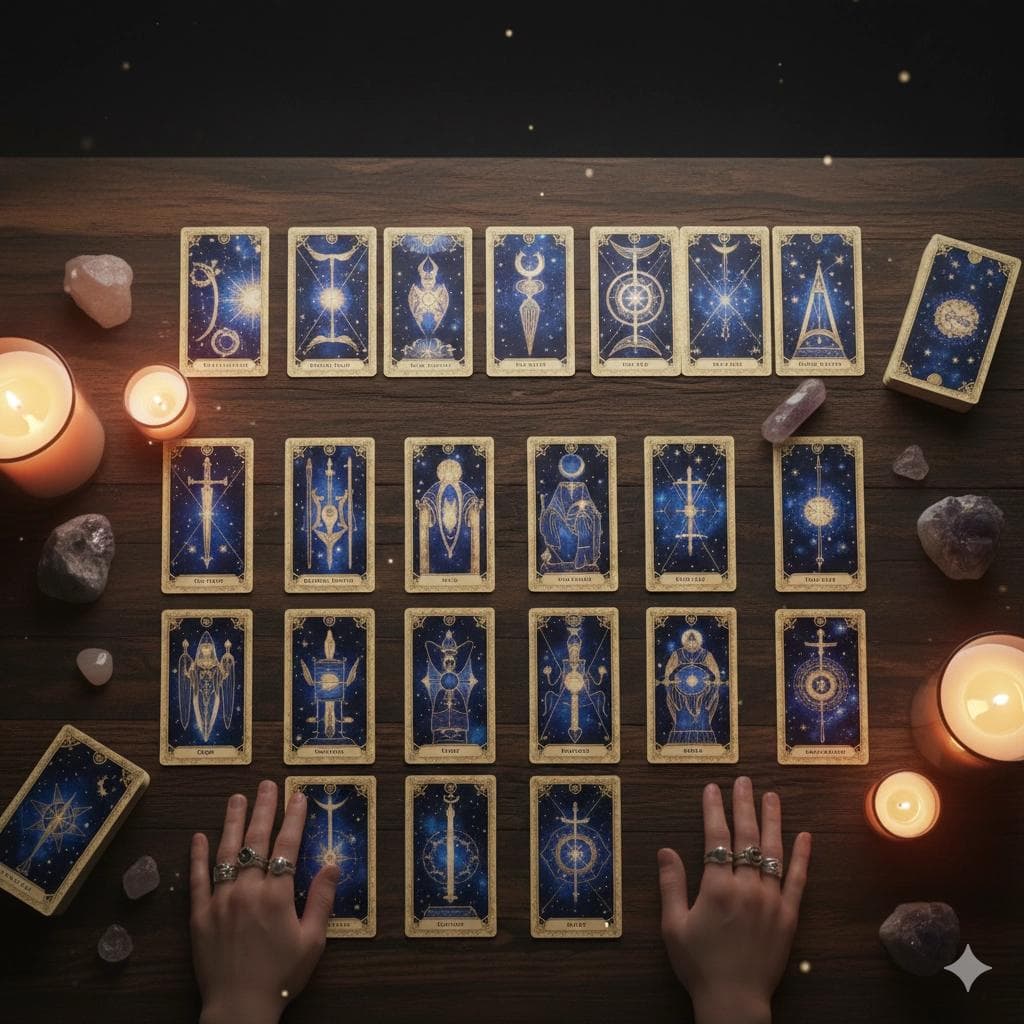
Within the Minor Arcana, four suits divide the cards by theme. Wands deal with energy and action. Cups cover emotions and relationships. Swords handle thoughts and conflict. Pentacles focus on money and the material world.
Each suit runs from Ace through 10, then four court cards: Page, Knight, Queen, and King. The numbered cards show situations. The court cards often represent people or personality traits.
Deck Differences: Strength and Justice Numbering
Different tarot decks number Strength and Justice differently. The Rider-Waite-Smith deck (created by Arthur Edward Waite in 1909) assigns Strength as card VIII (8) and Justice as card XI (11). Older decks like the Tarot de Marseille and Aleister Crowley's Thoth Tarot use the opposite: Justice as VIII (8) and Strength as XI (11).
Waite swapped these two cards to align with astrological and numerological symbolism. He associated Strength with Leo (ruled by the Sun, number 8 in his system) and Justice with Libra (the scales, number 11). Most modern decks follow the RWS numbering, though traditional Marseille readers and Thoth practitioners use the original order.
Celesties uses Rider-Waite-Smith numbering: Strength is card 8, Justice is card 11. When reading tarot card meanings on this site, expect RWS-style interpretations and structure. If you use a Marseille or Thoth deck, adjust accordingly.
Major Arcana (22 Cards)
The Major Arcana follows a path called The Fool's Journey — a story of personal and spiritual growth from innocence (The Fool) to fulfillment (The World).
| Number | Card | Keywords |
|---|---|---|
| 0 | The Fool | New beginnings, innocence, leap of faith |
| I | The Magician | Manifestation, willpower, skill |
| II | The High Priestess | Intuition, mystery, inner knowledge |
| III | The Empress | Abundance, nurturing, fertility |
| IV | The Emperor | Authority, structure, leadership |
| V | The Hierophant | Tradition, guidance, conformity |
| VI | The Lovers | Love, harmony, choices |
| VII | The Chariot | Determination, willpower, victory |
| VIII | Strength | Courage, patience, inner power |
| IX | The Hermit | Solitude, introspection, wisdom |
| X | Wheel of Fortune | Cycles, destiny, change |
| XI | Justice | Fairness, truth, accountability |
| XII | The Hanged Man | Surrender, new perspective, pause |
| XIII | Death | Transformation, endings, rebirth |
| XIV | Temperance | Balance, moderation, patience |
| XV | The Devil | Bondage, materialism, shadow self |
| XVI | The Tower | Upheaval, sudden change, revelation |
| XVII | The Star | Hope, inspiration, renewal |
| XVIII | The Moon | Illusion, intuition, the subconscious |
| XIX | The Sun | Joy, success, vitality |
| XX | Judgement | Rebirth, reflection, reckoning |
| XXI | The World | Completion, fulfillment, wholeness |
Minor Arcana (56 Cards)
The Minor Arcana covers the details of daily life. Four suits, 14 cards each, organized by element.
Suit of Wands
Fire element. Energy, passion, creativity, ambition, and action. Wands show what drives you forward.
Suit of Cups
Water element. Emotions, relationships, intuition, and feelings. Cups reflect your inner world.
Suit of Swords
Air element. Thoughts, communication, conflict, and truth. Swords deal with the mind and decisions.
Suit of Pentacles
Earth element. Money, career, health, and material reality. Pentacles ground you in the physical world.
Cards by Suit
Wands
| Card | Keywords |
|---|---|
| Ace of Wands | New inspiration, potential, spark |
| Two of Wands | Planning, decisions, future vision |
| Three of Wands | Expansion, progress, looking ahead |
| Four of Wands | Celebration, home, stability |
| Five of Wands | Conflict, competition, tension |
| Six of Wands | Victory, recognition, success |
| Seven of Wands | Defensiveness, standing your ground |
| Eight of Wands | Speed, movement, rapid progress |
| Nine of Wands | Resilience, persistence, last push |
| Ten of Wands | Burden, overwork, responsibility |
| Page of Wands | Enthusiasm, exploration, discovery |
| Knight of Wands | Adventure, energy, impulsiveness |
| Queen of Wands | Confidence, warmth, determination |
| King of Wands | Leadership, vision, bold action |
Cups
| Card | Keywords |
|---|---|
| Ace of Cups | New love, emotional beginning, compassion |
| Two of Cups | Partnership, connection, mutual attraction |
| Three of Cups | Friendship, celebration, community |
| Four of Cups | Apathy, contemplation, missed opportunity |
| Five of Cups | Loss, grief, regret |
| Six of Cups | Nostalgia, childhood, reunion |
| Seven of Cups | Illusion, fantasy, too many choices |
| Eight of Cups | Walking away, searching, letting go |
| Nine of Cups | Satisfaction, wish fulfillment, contentment |
| Ten of Cups | Family happiness, harmony, emotional fulfillment |
| Page of Cups | Creativity, intuition, youthful emotion |
| Knight of Cups | Romance, charm, following the heart |
| Queen of Cups | Empathy, nurturing, emotional depth |
| King of Cups | Emotional maturity, calm, compassion |
Swords
| Card | Keywords |
|---|---|
| Ace of Swords | Clarity, breakthrough, new idea |
| Two of Swords | Indecision, stalemate, avoidance |
| Three of Swords | Heartbreak, sorrow, painful truth |
| Four of Swords | Rest, recovery, contemplation |
| Five of Swords | Conflict, defeat, hollow victory |
| Six of Swords | Transition, moving on, healing |
| Seven of Swords | Deception, strategy, getting away |
| Eight of Swords | Restriction, self-imposed limits, trapped |
| Nine of Swords | Anxiety, worry, nightmares |
| Ten of Swords | Endings, rock bottom, painful closure |
| Page of Swords | Curiosity, sharp mind, restlessness |
| Knight of Swords | Ambition, speed, directness |
| Queen of Swords | Independence, clear thinking, boundaries |
| King of Swords | Authority, intellect, truth |
Pentacles
| Card | Keywords |
|---|---|
| Ace of Pentacles | New opportunity, prosperity, potential |
| Two of Pentacles | Balance, juggling, adaptability |
| Three of Pentacles | Teamwork, skill, collaboration |
| Four of Pentacles | Security, control, possessiveness |
| Five of Pentacles | Hardship, loss, isolation |
| Six of Pentacles | Generosity, giving, receiving |
| Seven of Pentacles | Patience, investment, waiting for results |
| Eight of Pentacles | Dedication, craftsmanship, skill building |
| Nine of Pentacles | Abundance, independence, self-sufficiency |
| Ten of Pentacles | Legacy, family wealth, long-term success |
| Page of Pentacles | Ambition, new opportunity, diligence |
| Knight of Pentacles | Hard work, reliability, patience |
| Queen of Pentacles | Nurturing, practicality, financial security |
| King of Pentacles | Wealth, business success, stability |
How to Use Card Meanings in Readings
Each card page on Celesties gives you:
- Upright meaning — what the card says when drawn normally
- Reversed meaning — the shifted interpretation when the card appears upside down
- Love / Career / Finances / Spirituality — how the card applies to different life areas
- Keywords — quick reference for faster readings
- Navigation — links to the next and previous card in sequence
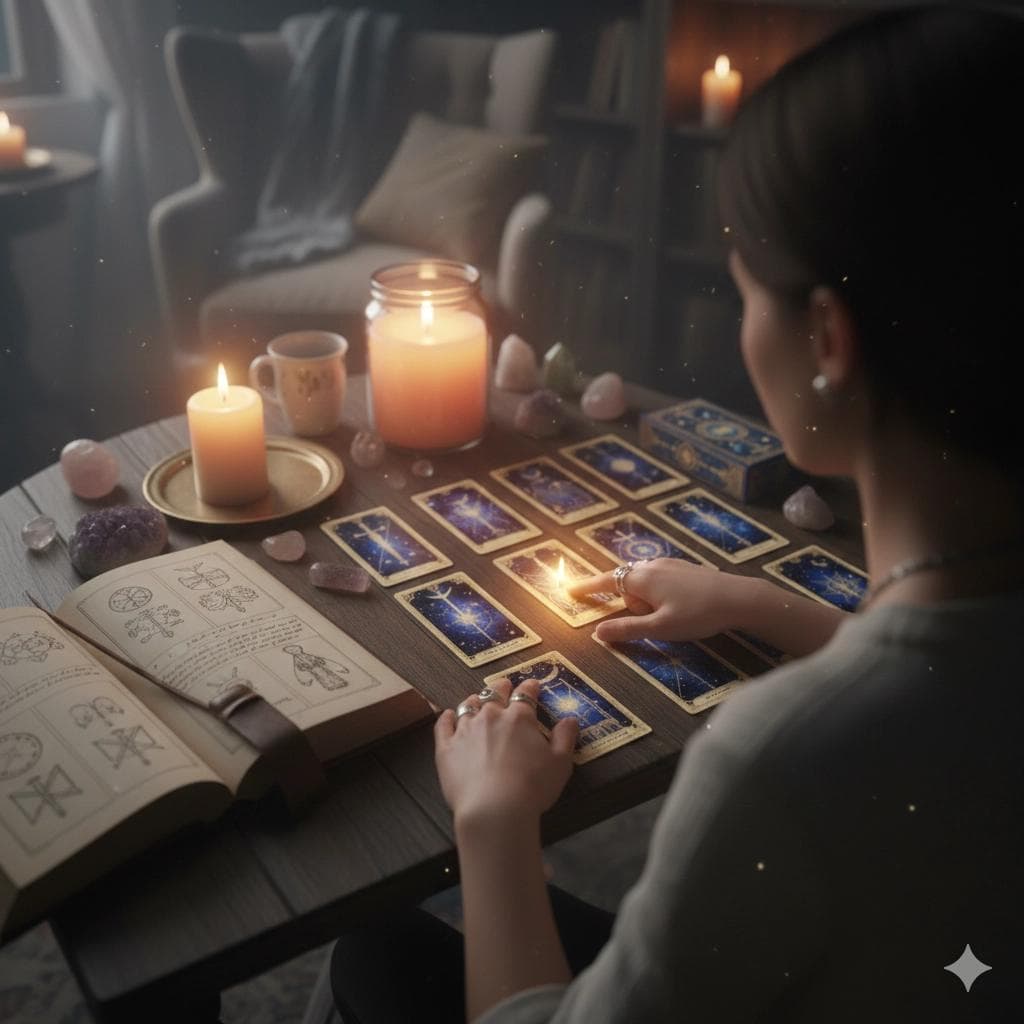
Don't memorize all 78 at once. Start with the Major Arcana, then learn one suit at a time. Use individual card pages as a reference during readings — look them up as you go.
How to Learn All 78 Tarot Cards
Start with the 22 Major Arcana
These are the most recognizable and carry the strongest themes. Learn them as a story — The Fool's Journey from innocence to completion.
Learn One Suit at a Time
Pick the suit that connects with you most. Fire (Wands) for action-oriented people. Water (Cups) if you lead with emotions. Air (Swords) for thinkers. Earth (Pentacles) for practical types.
Practice with Daily Draws
Pull one card each morning. Read its meaning, then notice how it shows up during your day. This builds real understanding faster than flashcards.
Read Cards in Spreads
Once you know individual meanings, start reading cards together in spreads. Context changes everything — the same card means different things in different positions.
Frequently Asked Questions
How many cards are in a tarot deck?
78 total. 22 Major Arcana cards and 56 Minor Arcana cards. The Minor Arcana divides into four suits of 14 cards each: Wands, Cups, Swords, and Pentacles.
What is the difference between Major and Minor Arcana?
Major Arcana covers significant life events, spiritual growth, and turning points. Minor Arcana deals with everyday situations — work, relationships, finances, and daily decisions.
Do I need to memorize all 78 cards?
No. Most readers learn the Major Arcana first, then build knowledge over time. You can always reference card meanings during a reading. Understanding comes with practice, not memorization.
What do reversed tarot cards mean?
A reversed card (drawn upside down) usually signals a blocked, delayed, or internalized version of the upright meaning. Some readers don't use reversals at all — it's a personal choice.
Which cards should I learn first?
Start with the Major Arcana. They appear less often but carry more weight in readings. After that, learn one Minor Arcana suit at a time rather than jumping between suits.
What do the four suits represent?
Wands = fire, energy, action. Cups = water, emotions, relationships. Swords = air, thoughts, conflict. Pentacles = earth, money, material world. Each suit also maps to a season and area of life.