Three Card Spread — Simple, Clear, Versatile
Three cards. Three positions. One clear answer. The three card spread is the most versatile layout in tarot — it works for almost any question, takes just a few minutes, and gives you enough depth to act on.
What is the Three Card Spread?
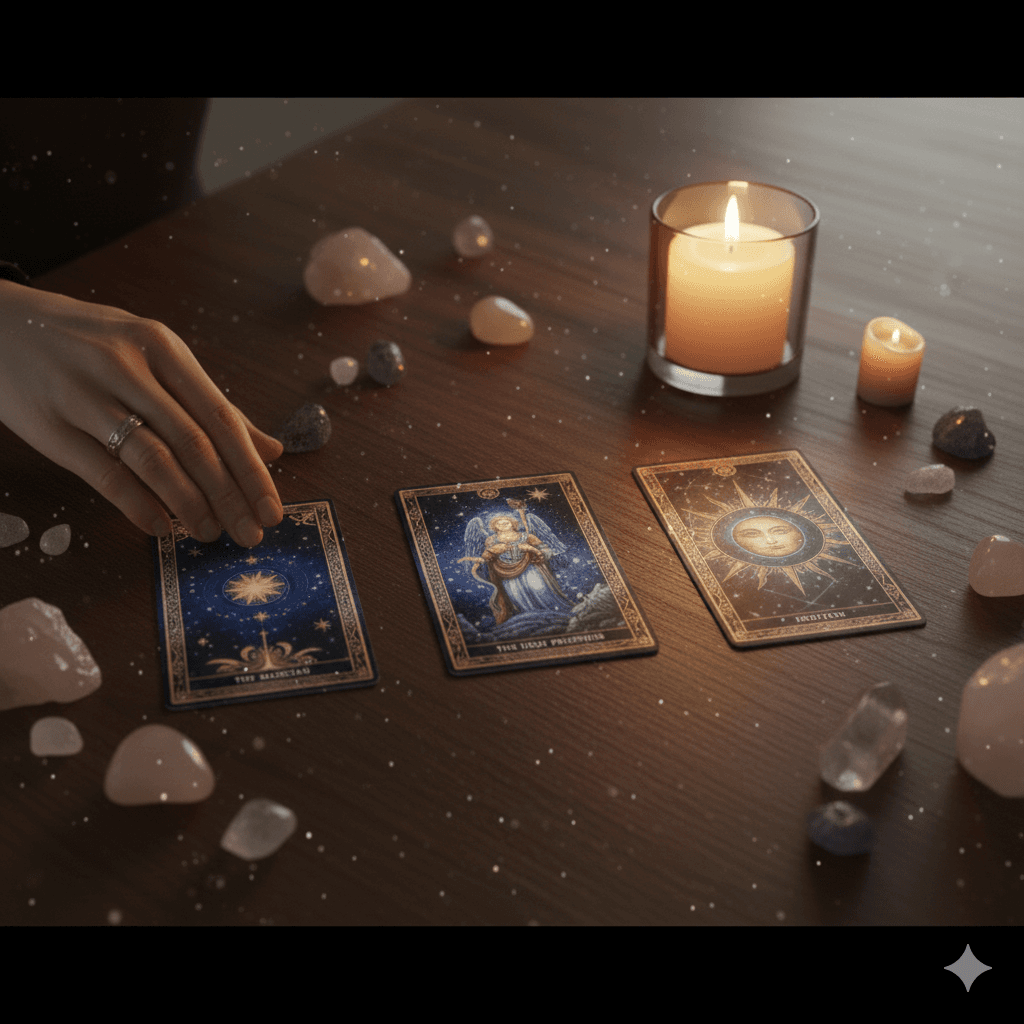
You draw three cards and lay them in a row. Each card gets a specific role based on the tarot spread layout you choose — most commonly Past / Present / Future. The simplicity is the point: three cards are enough to see a pattern, tell a story, and give direction.
This is the 3 card tarot spread most tarot readers learn first. It's also the one experienced readers come back to when they want a focused answer without the complexity of a 10-card Celtic Cross.
Celesties recommends it for daily practice. Pull three cards each morning, write down what you see, and notice how the themes play out during your day. Within a month, you'll know the cards well.
Three Card Layouts
The three positions can represent different things depending on your question. Here are the most used layouts:
Past / Present / Future
The classic simple tarot layout. Card 1 shows what led to the current situation. Card 2 shows where things stand now. Card 3 shows where things are heading. Best for: understanding a timeline or trajectory.
Situation / Action / Outcome
Card 1 describes the situation. Card 2 suggests what action to take. Card 3 shows the likely result of that action. Best for: decision-making and practical advice.
Mind / Body / Spirit
Card 1 reflects your mental state. Card 2 reflects your physical health or material world. Card 3 reflects your emotional or spiritual condition. Best for: self-check-ins and holistic awareness.
You / The Other Person / The Relationship
Card 1 represents your energy. Card 2 represents the other person's energy. Card 3 shows the dynamic between you. Best for: relationship questions.
Option A / Option B / Advice
Card 1 explores the first option. Card 2 explores the second. Card 3 offers guidance on which direction to take. Best for: choosing between two paths.
How to Read a Three Card Spread
Step 1: Choose Your Layout
Pick the three-position layout that matches your question. Past/Present/Future is the default if you're not sure.
Step 2: Draw and Place
Shuffle while thinking about your question. Draw three cards and lay them left to right, face-down. Then flip them one at a time.
Step 3: Read Each Card in Position
Don't just read the card's general meaning — read it through the lens of its position. The Tower in the "Past" slot means something very different from The Tower in "Future."
Step 4: Connect the Three
Look at the spread as one story. How does Card 1 lead to Card 2? How does Card 2 lead to Card 3? The relationship between the cards matters as much as each individual card.
Example Readings
Career Question: "Should I accept this job offer?"
Layout: Situation / Action / Outcome
- Card 1 (Situation): Four of Cups — You're feeling bored or unfulfilled in your current role.
- Card 2 (Action): Knight of Wands — Take bold action. The offer aligns with forward momentum.
- Card 3 (Outcome): The Sun — Joy and success. This path leads somewhere bright.
Reading: Your current situation feels stagnant. The cards suggest that taking the new role brings energy and positive results.
Relationship Question: "What do I need to know about this relationship?"
Layout: You / Them / The Relationship
- Card 1 (You): Queen of Cups — You're emotionally open and nurturing.
- Card 2 (Them): Five of Swords — They may be guarded or dealing with conflict.
- Card 3 (Relationship): Two of Cups — Despite differences, a genuine connection exists.
Reading: You're more emotionally available than they are right now. The bond is real, but give them space to work through their own struggles.
Tips for Better Three Card Readings
Write It Down
Write down your question, the three cards, and your interpretation. Reviewing past readings helps you spot patterns and track how readings played out.
One Question at a Time
Don't ask three different questions in one spread. One question per reading keeps interpretations clear and prevents confusion.
Trust Your First Impression
When you flip a card, notice your immediate reaction before looking up the "official" meaning. That first impression often holds the real insight.
How to Do a Three Card Tarot Reading
Ask Your Question
Formulate a clear question. Specific questions give specific answers. "What should I focus on at work this week?" beats "Tell me about work."
Choose a Layout
Pick the three positions that fit your question. Past/Present/Future for timelines. Situation/Action/Outcome for decisions. You/Them/Relationship for connections.
Shuffle, Draw, and Lay Out
Shuffle with your question in mind. Draw three cards. Place them in a row, left to right. Flip one at a time.
Interpret and Journal
Read each card in its position, then connect the three into one story. Write it down. Come back to it in a few days to see how it played out.
Frequently Asked Questions
Is the Three Card Spread good for beginners?
Yes — it's the best starting point. Three cards are enough to tell a story without being overwhelming. You'll learn card meanings, positional context, and narrative reading all at once.
What's the most popular Three Card layout?
Past / Present / Future. It's intuitive, works for any topic, and gives you a timeline. Situation / Action / Outcome is a close second, especially for decision-making.
Can I do multiple Three Card readings in a row?
You can, but don't re-ask the same question. Each reading should address a different angle or a new question. If you keep pulling on the same topic, the answers tend to get confusing.
How is the Three Card Spread different from a Celtic Cross?
Scale and depth. Three cards give you a focused snapshot. The Celtic Cross (10 cards) gives you a layered analysis with past, future, external influences, hopes, and fears. Use three cards for quick answers, Celtic Cross for complex situations.
What if all three cards are reversed?
Three reversed cards suggest blocked or internalized energy across your question. It's a signal to pause, reflect, and look at what might be holding things back. Not a bad omen — just a nudge to pay attention.
Should I use the Three Card Spread for yes/no questions?
You can, but a dedicated Yes/No Reading technique is more direct. The Three Card Spread gives context and story, which is more helpful for questions that need nuance.