Seven of Swords — Strategy, Stealth, and the Ethics of Cunning
Suit: Swords (Air) Number: 7 Element: Air Keywords: Strategy, deception, cunning, stealth, trickery, acting alone, clever thinking, betrayal
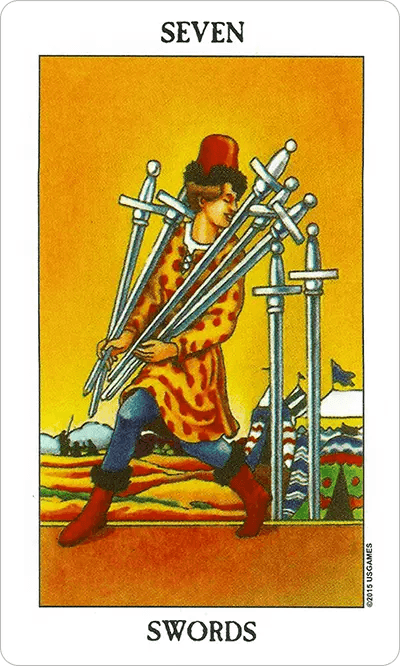
The Seven of Swords shows a figure sneaking from a military camp, carrying five swords while leaving two behind. They glance back with a sly expression. Thief? Spy? Clever strategist? The card's meaning depends entirely on context and intention.
This is the card of strategic thinking and stealth — achieving goals through cunning rather than direct confrontation. But also the card of deception — lying, stealing, breaking trust, acting in self-interest at others' expense.
The Seven of Swords occupies morally gray territory. Sometimes strategy is necessary. Sometimes it crosses into dishonesty. This card asks you to examine your intentions and methods.
Symbolism on the Card
The Rider-Waite-Smith Seven of Swords contains rich imagery about strategy and stealth:
The Sneaking Figure — A person tiptoes away from a camp, carrying swords in an awkward bundle. Their posture and expression suggest they're trying not to be noticed. This represents acting in secret, operating behind the scenes, or doing things you don't want others to see.
The Five Swords — The figure carries five of the seven swords, representing ideas, plans, or resources they're taking. This can be theft, gathering information, or strategic retrieval. The awkward way they're carried suggests this isn't quite working — something about this plan is clumsy or unsustainable.
The Two Swords Left Behind — Two swords remain stuck in the ground. The figure couldn't (or chose not to) take everything. This represents partial success, leaving evidence behind, or the impossibility of getting away with something completely.
The Backward Glance — The figure looks over their shoulder, checking if they've been noticed. This suggests guilt, fear of being caught, or awareness that what they're doing is questionable. There's no confident forward gaze here.
The Military Camp — Tents and people appear in the background, representing the community, group, or situation the figure is sneaking away from. This suggests going against the group, acting alone, or betraying collective trust.
The Smirk — In many versions, the figure has a sly or smug expression. They think they're getting away with something. This represents cleverness, cunning, or the satisfaction of outsmarting others.
The Red Boots — Bright footwear despite attempting stealth. This suggests that despite efforts to be sneaky, the deception might be more obvious than the figure thinks. You can't hide completely.
Seven of Swords Upright — Strategic Thinking or Deception
When the Seven of Swords appears upright in a reading, it signals strategic thinking, stealth, or deception — which interpretation fits depends entirely on context and your role in the situation.
As Strategy: The positive interpretation of this card is that you're being clever and strategic. You're finding a way around obstacles rather than confronting them directly. You're working behind the scenes. You're using your mind to achieve goals that direct action couldn't accomplish. This is diplomacy, tactical thinking, and smart problem-solving.
As Deception: The challenging interpretation is that someone (possibly you) is lying, stealing, or betraying trust. Information is being withheld. Someone is acting in self-interest while pretending otherwise. There's sneakiness, dishonesty, or behavior that violates ethical standards.
Core upright meanings:
- Strategic thinking — Clever planning, indirect approaches, tactical maneuvering
- Deception and lying — Withholding truth, misleading others, dishonesty
- Acting alone — Going solo, not asking for help, independent (sometimes isolated) action
- Getting away with something — Successfully avoiding consequences or detection
- Betrayal — Violating trust, acting against others' interests while pretending alliance
- Stealth and cunning — Operating in secret, behind-the-scenes maneuvering
- Partial success — Getting some but not all of what you wanted
The Seven of Swords asks: Are you being strategic or dishonest? Is someone deceiving you? What's being done in secret that should be brought to light? Is cleverness serving your integrity or compromising it?
This card reminds you that not all strategy is deception, but all deception eventually has consequences.
Seven of Swords Reversed — Getting Caught or Coming Clean
The Seven of Swords reversed typically indicates that secrets are being revealed or deception is being exposed:
1. Being Caught or Discovered
The most common interpretation of the reversed Seven is that the sneaky behavior is discovered. The figure drops the swords. Someone notices what's happening. The lie is exposed. The betrayal comes to light. The strategy fails because it was based on secrecy that couldn't be maintained.
Signs of exposure:
- Lies being discovered
- Secrets coming to light
- Getting caught doing something questionable
- Plans failing because they were based on deception
- Reputation damaged by revealed behavior
2. Coming Clean and Confession
The reversed Seven can also indicate voluntary confession. The burden of secrecy becomes too heavy. You decide to tell the truth. You admit what you've been hiding. The relief of honesty outweighs the comfort of deception.
Signs of honest confession:
- Admitting wrongdoing
- Revealing secrets you've kept
- Choosing transparency over continued deception
- Taking responsibility for questionable behavior
3. Abandoning Unethical Strategy
Sometimes the reversed Seven shows choosing ethical behavior over clever tactics. You realize the strategic approach is compromising your integrity, and you decide to be direct instead. You stop trying to manipulate or deceive and choose honest communication.
The Seven of Swords reversed asks: What's being revealed? Are you ready to come clean? What happens when you stop being sneaky and just be honest?
Seven of Swords in Love and Relationships
Upright in Love:
The Seven of Swords in a love reading is often a warning card. It can indicate secrets, lies, or infidelity in relationships. Someone isn't being fully honest. Information is being withheld. There might be a third party you don't know about. Trust is being violated through deception.
This card can also represent emotional unavailability masked as availability — someone who seems interested but is actually keeping their options open, or who says one thing but does another.
For singles, the Seven of Swords can indicate that you or someone you're dating isn't being honest about intentions, or that you're approaching dating strategically rather than authentically.
Positively, this card can suggest being strategic about a relationship issue — finding a clever way to address a problem without causing unnecessary conflict.
The Seven asks: What's not being said in this relationship? Is someone (including you) being dishonest? What would change if complete honesty was required?
Reversed in Love:
The Seven of Swords reversed in love often means discovering secrets or lies. The affair is discovered. The truth comes out. What was hidden becomes visible. This is painful but also clarifying — at least now you know the reality.
The reversed Seven can also indicate confession in relationships — admitting you've been dishonest, coming clean about something you've hidden, or finally being fully transparent with a partner.
Alternatively, it can show choosing honesty over strategic game-playing in dating.
The reversed Seven asks: What truth is being revealed? Can you handle honesty even if it hurts? What becomes possible when all the cards are on the table?
Seven of Swords in Career and Finances
Upright in Career:
The Seven of Swords in career readings can indicate office politics, clever strategy, or workplace deception. You might be navigating a tricky professional situation that requires diplomatic maneuvering. You're being strategic about how you approach a work challenge.
Negatively, this card can indicate workplace betrayal — someone taking credit for your work, stealing ideas, or undermining you behind the scenes. Or it can suggest you're the one engaging in questionable professional behavior (dishonesty, cutting corners, violating trust).
The Seven of Swords can also represent working independently rather than as part of a team, sometimes to the point of not asking for help when you need it.
Upright in Finances:
Financially, the Seven of Swords upright warns of financial deception — someone lying about money, hidden costs, deals that seem good but have catches, or your own financial dishonesty (lying about spending, hiding purchases, financial infidelity in relationships).
This card can also indicate being strategic with money — finding clever ways to save or earn that others haven't thought of.
Reversed in Career:
The Seven of Swords reversed in career contexts often means workplace deception being exposed — someone's dishonesty comes to light, credit-stealing is discovered, or lies about professional qualifications are revealed.
This can also indicate choosing ethical behavior at work even when a less ethical approach might be easier or more profitable.
Reversed in Finances:
Financially, the reversed Seven suggests financial secrets being discovered or coming clean about money issues you've been hiding. This can be painful but also liberating.
Seven of Swords' Spiritual Meaning
Spiritually, the Seven of Swords represents spiritual dishonesty or the shadow aspects of the spiritual journey. This card appears when you're being dishonest with yourself about your spiritual path, when spiritual practices become performance rather than genuine practice, or when you're using spirituality to avoid real work.
This can manifest as:
- Spiritual bypassing — Using spiritual concepts to avoid dealing with real problems
- False authenticity — Presenting a spiritual persona that doesn't match your actual practice
- Self-deception — Telling yourself you're more evolved than you are
- Using spiritual knowledge for ego rather than genuine growth
The Seven of Swords asks difficult questions:
- Where am I being spiritually dishonest with myself?
- Am I using spiritual concepts to avoid uncomfortable truths?
- Is my spiritual practice genuine or performative?
- What would radical honesty with myself reveal?
The Seven of Swords teaches that spiritual growth requires brutal honesty, especially with yourself. You can't sneak your way to enlightenment.
Questions to Ask When You Draw the Seven of Swords
The Seven of Swords invites reflection on honesty, strategy, and ethics. When this card appears, consider:
- Am I being strategic or dishonest? Where's the line?
- What am I hiding, and why?
- Is someone deceiving me? What are the signs?
- What would happen if I stopped being clever and just told the truth?
- Am I acting in self-interest at others' expense?
- What secrets am I keeping that are weighing on me?
- Is my strategic approach serving my integrity or compromising it?
- What can't I get away with, even if I think I can?
The Seven of Swords reminds you that cleverness without ethics eventually backfires, and that the energy spent maintaining deception is often greater than the cost of honesty.