Six of Swords — Transition, Travel, and Moving Toward Calmer Waters
Suit: Swords (Air) Number: 6 Element: Air Keywords: Transition, moving on, travel, mental shift, healing journey, leaving difficulties behind, recovery, passage
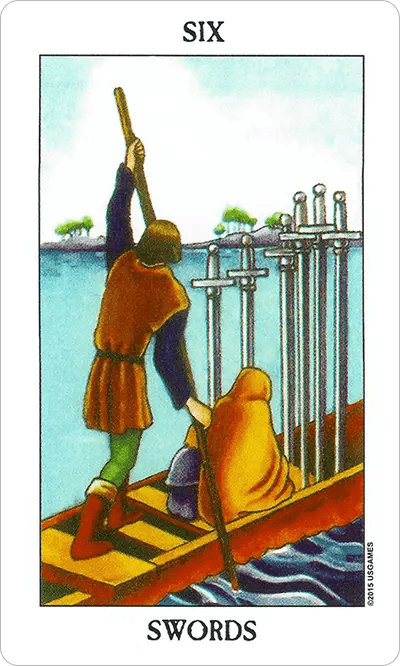
The Six of Swords shows a ferryman guiding a boat across water. In the boat sit a woman and child, six swords standing upright. Behind them, the water is choppy and rough. Ahead, it's calm. They're in the middle — between the storm they're leaving and the peace they're moving toward.
This is the card of transition. It represents the journey from difficulty to better circumstances, from mental chaos to clarity, from pain to healing. The Six of Swords doesn't promise you've arrived at peace — it promises you're moving in the right direction.
This card often appears during literal travel or moves, but more often it represents mental and emotional transition — the process of leaving old thought patterns, toxic situations, or painful periods behind and gradually moving toward something better.
Symbolism on the Card
The Rider-Waite-Smith Six of Swords is rich with symbolism about transition and healing:
The Boat — A small vessel carries passengers across water. The boat represents the vehicle of transition — the therapy, the decision to leave, the new perspective, or the literal move that carries you from one state to another. You're in motion, even if the journey isn't complete.
The Ferryman — A cloaked figure poles the boat forward. This represents guidance, whether external (a therapist, friend, or mentor) or internal (your own wisdom guiding you forward). Someone or something is helping you navigate this transition.
The Woman and Child — Hooded, quiet figures sit in the boat, not looking back. They represent leaving something behind with sadness or reflection. This isn't a triumphant exit — it's a necessary one. The child can represent innocence, vulnerability, or the parts of yourself you're protecting as you move forward.
The Six Swords — Swords stand upright in the boat, representing the thoughts, mental patterns, or painful experiences you're carrying with you. The Six of Swords doesn't promise you leave everything behind — you take some things with you, integrated as wisdom or memory rather than active pain.
The Rough Water Behind — The water at the back of the boat is choppy and turbulent, representing the difficult circumstances, mental chaos, or painful situation you're leaving. The contrast shows you're moving away from trouble.
The Calm Water Ahead — The water toward which the boat travels is noticeably calmer, representing the peace, clarity, or better circumstances you're moving toward. It's not here yet, but it's visible. Hope is on the horizon.
The Gray Sky — The sky remains overcast and subdued. This represents the emotional tone of transition — it's not celebratory yet. You're in the in-between space, and that space is quiet, reflective, and still somewhat heavy.
Six of Swords Upright — Moving Toward Something Better
When the Six of Swords appears upright in a reading, it signals transition, travel, or moving away from difficulty. You're leaving something behind and heading toward better circumstances. This might be a literal move (changing cities, traveling, relocating), or it might be a mental and emotional transition (shifting perspective, leaving a painful period, changing thought patterns).
The Six of Swords upright acknowledges that transition isn't instant. You're in the middle of the journey. The difficult part isn't completely over, and the peaceful part hasn't fully arrived. You're in the boat, on the water, making progress but not yet at the destination.
This card brings a message of hope: things are getting better. You're moving in the right direction. The journey might still feel heavy or sad, but you're no longer drowning in the choppy water you left behind.
Core upright meanings:
- Transition and passage — Moving from one phase of life to another
- Literal travel — Physical relocation, trips, or journeys
- Leaving difficulties behind — Consciously moving away from painful situations
- Mental shift — Changing perspective, thought patterns, or mental habits
- Healing journey — The process of recovery, not yet complete but underway
- Guided movement — Help from others or inner wisdom leading you forward
- Gradual improvement — Things getting slowly but steadily better
The Six of Swords asks: What are you moving away from? What are you moving toward? Can you trust the process even though you're not there yet?
This card reminds you that progress isn't always dramatic. Sometimes healing looks like a quiet boat ride toward calmer waters.
Six of Swords Reversed — Resistance to Transition or Delayed Journey
The Six of Swords reversed typically indicates difficulty with transition or resistance to moving forward:
1. Stuck or Unable to Move On
The most common interpretation of the reversed Six is that the journey isn't happening. You know you need to leave or move forward, but something is keeping you stuck. The boat won't move. You're clinging to what's familiar, even though it's painful. Or external circumstances are preventing the transition you want to make.
Signs of blocked transition:
- Knowing you need to leave a situation but feeling unable to
- Emotional attachment to the past preventing forward movement
- Fear of the unknown keeping you in familiar pain
- Delayed travel plans or cancelled moves
- Mental patterns that refuse to shift despite your efforts
2. Returning to Old Problems
The reversed Six can also indicate going backward instead of forward. The boat turns around. You return to the toxic situation you left. You fall back into old thought patterns you'd moved past. You repeat cycles instead of completing the transition.
Signs of backward movement:
- Returning to an ex or situation you left
- Falling back into mental patterns you'd outgrown
- Sabotaging your own progress
- Letting fear pull you back to the familiar
3. Turbulent Transition
Sometimes the reversed Six suggests the transition is happening, but it's rougher than expected. The boat is moving, but the water is choppy throughout. The journey is more difficult, taking longer, or filled with unexpected obstacles.
The Six of Swords reversed asks: What's keeping you from moving forward? Are you clinging to the past? What would it take to trust the journey?
Six of Swords in Love and Relationships
Upright in Love:
The Six of Swords in a love reading often indicates moving on from relationship difficulty or transitioning to a healthier relational dynamic. For couples, this might mean you're leaving a rough period behind and things are gradually improving. You've weathered a storm and you're healing, though you're not all the way healed yet.
This card can also represent physical distance in relationships — one partner traveling, long-distance relationships, or the space that comes from someone moving away.
For singles, the Six of Swords often indicates recovery from past heartbreak and moving toward being ready for new love. You're healing. You're not fully healed yet, but you're in the boat heading toward calmer waters. You're letting go of past pain and becoming emotionally available again.
The Six asks: What relationship pain are you leaving behind? Can you trust that your heart is healing, even if slowly? What does moving forward in love look like for you?
Reversed in Love:
The Six of Swords reversed in love warns of inability to move on from past relationships or patterns. You're stuck in grief over an ex. You keep returning to the same toxic dynamic. You can't quite leave the situation even though you know you should.
For couples, the reversed Six can indicate that relationship improvement is stalled — you're stuck in the rough water instead of moving toward calm.
The reversed Six can also indicate cancelled travel plans that were important to the relationship, or emotional distance that's not healing.
The reversed Six asks: What's keeping you attached to what's not working? Are you ready to actually leave, or are you just thinking about it?
Six of Swords in Career and Finances
Upright in Career:
The Six of Swords in career readings indicates professional transition. You might be changing jobs, shifting career paths, or moving from a difficult work situation toward something better. This card can also represent work-related travel or relocation for professional reasons.
The Six of Swords suggests that you're leaving workplace difficulty behind — toxic dynamics, a failing project, or a job that wasn't right for you. You're moving toward something that fits better, though the transition period might feel uncertain or heavy.
This card can also indicate mental shifting around work — changing your attitude toward your career, developing new professional perspectives, or moving from burnout toward better balance.
Upright in Finances:
Financially, the Six of Swords upright suggests gradual financial improvement. You're moving from financial difficulty toward stability, though you're not fully stable yet. This might mean getting out of debt slowly, recovering from financial loss, or transitioning to better financial circumstances.
The card can also indicate financial decisions related to moving or travel.
Reversed in Career:
The Six of Swords reversed in career contexts indicates difficulty leaving a job you know isn't working. You're stuck in the toxic workplace because you can't find something better, fear the unknown, or feel too comfortable despite being unhappy.
This can also show career transition that's stalled or professional travel that's delayed or cancelled.
The reversed Six might indicate returning to a job you'd left or falling back into work patterns you'd moved past.
Reversed in Finances:
Financially, the reversed Six warns of inability to improve financial circumstances despite trying, or falling back into financial patterns you'd worked hard to change (overspending, debt, financial denial).
Six of Swords' Spiritual Meaning
Spiritually, the Six of Swords represents the sacred journey of transformation and healing. Many spiritual paths recognize that growth isn't instant — it's a journey. Buddhist teachings speak of the path to enlightenment. Christian traditions reference "walking through the valley." The Six of Swords embodies this idea: you're traveling toward awakening, healing, or peace, even if you haven't arrived.
This card appears when you're transitioning spiritually — leaving old beliefs that no longer serve you, moving away from spiritual practices that feel empty, or gradually healing from spiritual crisis. The ferryman in the card can represent divine guidance, your higher self, or the wisdom that's helping you navigate this transition.
Spiritually, the Six of Swords asks:
- What spiritual beliefs or practices am I outgrowing?
- Can I trust the journey even when I can't see the destination clearly?
- What divine guidance is available to me during this transition?
- How am I being asked to let go and allow the journey to unfold?
The Six of Swords teaches that spiritual growth is a process, not a destination. Trust the boat. Trust the ferryman. Trust that the water ahead is calmer.
Questions to Ask When You Draw the Six of Swords
The Six of Swords invites reflection on transition, healing, and the journey forward. When this card appears, consider:
- What am I moving away from, and what am I moving toward?
- Can I trust this process even though I'm not at the destination yet?
- What am I carrying with me from the past (the swords in the boat)?
- What guidance is available to help me through this transition?
- Am I allowing myself to move forward, or am I clinging to the familiar?
- What does healing look like for me right now, in this in-between space?
- How can I honor the sadness of leaving while still moving forward?
- What would it mean to trust that calmer water is ahead?
The Six of Swords reminds you that you don't have to be fully healed to start the journey toward healing. Getting in the boat is enough.