Пятёрка Мечей — Пустая Победа и Цена Конфликта
Масть: Мечи (Воздух) Номер: 5 Стихия: Воздух Ключевые слова: Конфликт, поражение, предательство, пустая победа, победа любой ценой, испорченные отношения, гордость, хитрость, эгоизм
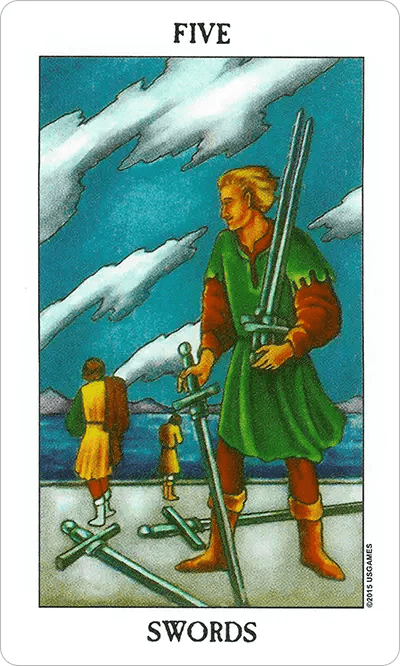
Пятёрка Мечей изображает фигуру, подбирающую мечи с земли и ухмыляющуюся вслед двум побеждённым противникам, уходящим в стыде. Небо неспокойно. Победитель стоит один. Он победил — но какой ценой?
Это карта конфликта, от которого всем только хуже. Она символизирует победу в споре, но потерю друга. Достижение своего, но ценой испорченных отношений. Оказаться правым, пока все остальные уходят. Пятёрка Мечей задаёт трудный вопрос: Оно того стоило?
Эта карта появляется в ситуациях, когда эго, гордость или потребность быть правым взяли верх. Когда общение стало боевым. Когда отношения превратились в поле битвы, а каждое взаимодействие ощущается как борьба за победу.
Символизм на карте
Карта Rider-Waite-Smith Пятёрка Мечей содержит образы, раскрывающие её сложное значение:
Победитель — Центральная фигура собирает пять мечей, глядя на двух побеждённых, уходящих прочь. Выражение победителя нередко читается как самодовольное или торжествующее. Он выиграл битву. Он собрал оружие. Но стоит один, и его победа выглядит пустой. Это символизирует человека, который ставит победу выше отношений.
Побеждённые фигуры — Двое уходят с опущенными плечами, лишившись мечей (своей ментальной или словесной силы). Они выглядят ранеными и пристыжёнными. Один закрывает лицо. Это символизирует эмоциональную цену конфликта — людей, которые были ранены, отвергнуты или побеждены в споре.
Разбросанные мечи — Три меча лежат на земле, пока победитель держит ещё два. Они символизируют последствия интеллектуальной или словесной битвы — слова, использованные как оружие, аргументы, ранящие вглубь, или жертвы конфликта.
Неспокойное небо — Тёмные тучи занимают часть неба, тогда как другие участки остаются яснее. Это символизирует эмоциональную атмосферу конфликта — бурную, неустойчивую и неудобную. Даже когда драка «закончена», атмосфера остаётся напряжённой.
Вода — На заднем плане виден водоём, символизирующий эмоциональные подводные течения под интеллектуальным конфликтом. Борьба могла быть об идеях или правоте, но под угрозой стоят эмоции.
Расстояние между фигурами — Победитель и проигравшие разделены физическим пространством. Это символизирует ущерб отношениям, нанесённый агрессивным конфликтом. Даже выиграв спор, вы теряете связь.
Пятёрка Мечей в прямом положении — Победа, которая стоит слишком дорого
Когда Пятёрка Мечей появляется в прямом положении в раскладе, она сигнализирует о конфликте, предательстве или победе, которая наносит ущерб отношениям. Это карта победы в битве и проигрыша в войне. Вы можете быть правы, но ваш подход оттолкнул людей. Вы получили желаемое, но ценой доверия, связи или уважения.
Пятёрка Мечей в прямом положении часто появляется в ситуациях, когда гордость и эго взяли под контроль. Разговоры превращаются в споры. Разногласия перерастают в борьбу за власть. Цель смещается с понимания к победе, с разрешения к доминированию.
Эта карта также может символизировать пребывание на проигравшей стороне такого конфликта. Вас победили в споре, кто-то предал вас, выбрав победу над лояльностью, или ранил вас, сражаясь нечестно ради своего.
Основные значения в прямом положении:
- Пустая победа — Победа, оставляющая ощущение пустоты или одиночества
- Конфликт и ссоры — Драки, портящие отношения, агрессивное общение
- Предательство — Кто-то выбирает личный интерес над честью или лояльностью
- Поражение — Проигрыш в споре или битве, боль от конфликта
- Победа любой ценой — Приоритет быть правым над добротой или поддержанием связи
- Борьба за власть — Конкуренция, в которой может быть только один победитель
- Уход — Выбор отказаться от токсичного конфликта
Пятёрка Мечей спрашивает: Важнее ли быть правым, чем поддерживать отношения? Что вы на самом деле выигрываете, если все остальные уходят? Стоит ли эта борьба того ущерба, который она причиняет?
Эта карта не всегда говорит о том, что вы неправы — иногда вы являетесь объектом чьего-то агрессивного поведения. Но она всегда сигнализирует, что конфликт обходится дороже, чем стоит.
Пятёрка Мечей в перевёрнутом положении — Примирение или Эскалация Конфликта
Пятёрка Мечей в перевёрнутом положении может указывать на две разные динамики:
1. Примирение и возмещение ущерба
Наиболее оптимистичная интерпретация перевёрнутой Пятёрки — конфликт разрешается. Кто-то извиняется. Люди выбирают связь, а не правоту. Победитель понимает, что его победа была пустой, и стремится восстановить отношения. Или те, кто потерпел поражение, обретают мир и движутся дальше.
Признаки примирения:
- Искренние извинения и попытки возместить ущерб
- Отказ от потребности быть правым
- Выбор мира, а не победы
- Осознание того, что цена конфликта слишком высока
- Начало прощения
2. Эскалация конфликта или неспособность отпустить
Перевёрнутая Пятёрка также может указывать на то, что конфликт усиливается. Кто-то так привержен победе, что сражается ещё беспощаднее. Обиды углубляются. Люди ищут мести, а не урегулирования. Перевёрнутое положение показывает конфликт, который нарастает, а не утихает.
Признаки эскалации конфликта:
- Мысли о мести и ответных действиях
- Неспособность простить или забыть
- Удержание обиды
- Ещё более нечестная борьба
- Отказ извиниться или признать неправоту
Какое значение применимо? Смотрите на окружающие карты и общую энергию. Если расклад указывает на движение к миру, перевёрнутая Пятёрка предполагает примирение. Если в нём сохраняется напряжённость, перевёрнутая Пятёрка предупреждает, что конфликт усиливается.
Пятёрка Мечей в перевёрнутом положении спрашивает: Готовы ли вы сложить оружие и заключить мир? Или вы всё ещё преданы победе любой ценой?
Пятёрка Мечей в Любви и Отношениях
Прямое положение в Любви:
Пятёрка Мечей в раскладе на любовь — это карта-предупреждение. Она указывает на конфликт в отношениях, борьбу за власть или токсичные паттерны общения. Вы с партнёром можете быть сосредоточены больше на победе в спорах, чем на взаимопонимании. Разговоры превращаются в дебаты. Разногласия становятся битвами, которые нужно выиграть, а не проблемами, которые нужно решить вместе.
Эта карта также может указывать на предательство — кто-то ставит свои интересы выше отношений, лжёт или нарушает доверие ради своего.
Для одиноких Пятёрка Мечей может указывать на то, что вы всё ещё несёте раны от прошлых отношенческих битв, или на знакомство с кем-то, кто подходит к отношениям соревновательно, а не совместно.
Пятёрка спрашивает: Вы пытаетесь победить или соединиться? Стоит ли этот спор того ущерба, который он наносит? Как выглядело бы опустить оружие и по-настоящему слушать?
Перевёрнутое положение в Любви:
Пятёрка Мечей в перевёрнутом положении в любви может означать примирение после ссоры. Кто-то извиняется. Оба устали от борьбы и готовы выбрать мир. Вы осознаёте, что быть правым важно меньше, чем быть вместе.
В качестве альтернативы перевёрнутая Пятёрка может предупреждать, что конфликт в отношениях нарастает — ссоры становятся злобнее, кто-то ищет мести за прошлые обиды, или обиды углубляются вместо того, чтобы исцеляться.
Перевёрнутая Пятёрка также может указывать на уход из токсичных отношений, где конфликт стал нормой.
Перевёрнутая Пятёрка спрашивает: Вы движетесь к миру или глубже в сражение? Вы можете простить, или вы ведёте счёт?
Пятёрка Мечей в Карьере и Финансах
Прямое положение в Карьере:
Пятёрка Мечей в раскладах на карьеру указывает на рабочий конфликт, офисную политику или токсичную конкуренцию. Вы можете находиться в среде, где люди борются за признание, подрывают друг друга или ставят личное продвижение выше командного успеха.
Эта карта может появиться, когда вы выиграли профессиональную битву, но испортили отношения в процессе — получили повышение, но коллеги вас недолюбливают. Вы доказали свою правоту, но теперь вам не доверяют.
Пятёрка Мечей также может указывать на пребывание на проигравшей стороне офисной политики — быть подорванным, преданным коллегой или побеждённым в борьбе за власть.
Прямое положение в Финансах:
В финансовом отношении Пятёрка Мечей в прямом положении предполагает финансовый конфликт или несправедливые сделки. Это могут быть споры из-за денег, кто-то использует вас финансово, или деловые сделки, где кто-то выигрывает за счёт другого.
Эта карта также может указывать на финансовую победу, но ценой этических потерь, или на зарабатывание денег способами, портящими отношения.
Перевёрнутое положение в Карьере:
Пятёрка Мечей в перевёрнутом положении в карьерном контексте может указывать на примирение на рабочем месте — урегулирование конфликтов с коллегами, выбор сотрудничества вместо конкуренции или решение руководством токсичной динамики.
В качестве альтернативы это может показывать, что рабочий конфликт усиливается — обиды углубляются, люди борются злобнее, или в ответ на конфликт ищут возмездия.
Перевёрнутая Пятёрка также может означать выбор уйти от токсичного рабочего конфликта, а не продолжать борьбу.
Перевёрнутое положение в Финансах:
В финансовом отношении перевёрнутая Пятёрка может указывать на урегулирование денежных споров или возмещение ущерба после финансового предательства. Она также может предупреждать об эскалации финансового конфликта или о неспособности отпустить финансовую обиду.
Духовное значение Пятёрки Мечей
Духовно Пятёрка Мечей символизирует эго на войне — ту часть нас, которая должна быть права, должна побеждать, должна доказывать своё превосходство. Эта карта появляется, когда эго взяло под контроль и мы забыли, что каждый, с кем мы боремся, — тоже человек, тоже борющийся, тоже достойный сострадания.
Многие духовные традиции учат, что потребность «выигрывать» в отношениях и спорах — это ловушка. Буддизм говорит о «правильной речи» — общении, которое правдиво, но также добро и необходимо. Христианство подчёркивает «подставить другую щёку». Эти учения признают то, что показывает Пятёрка Мечей: победа через агрессию пуста.
Духовно эта карта спрашивает:
- Где моё эго создаёт ненужный конфликт?
- Привержен ли я больше правоте, чем миру?
- Что значило бы «выиграть» эту ситуацию с состраданием, а не с агрессией?
- Могу ли я признать, что человек, с которым я борюсь, тоже страдает?
Пятёрка Мечей учит, что истинная духовная сила — это не победа над другими — это выбор связи вместо конфликта, понимания вместо победы и мира вместо гордости.
Вопросы для размышления при выпадении Пятёрки Мечей
Пятёрка Мечей приглашает к рефлексии о конфликте, победе и цене правоты. Когда эта карта появляется, задумайтесь:
- Что я выигрываю, если все остальные уходят?
- Важнее ли быть правым, чем поддерживать эти отношения?
- Я борюсь, чтобы что-то разрешить, или борюсь, чтобы победить?
- Меня предали, или это я ставлю свои интересы выше других?
- Что потребовалось бы, чтобы опустить оружие и выбрать мир?
- Держу ли я обиду из прошлых конфликтов?
- Какова реальная цена этой победы?
- Могу ли я уйти от этой борьбы, не считая это поражением?
Пятёрка Мечей напоминает нам, что некоторые битвы не стоят того, чтобы их выигрывать, и что истинная победа часто выглядит как выбор мира вместо доказательства своей правоты.